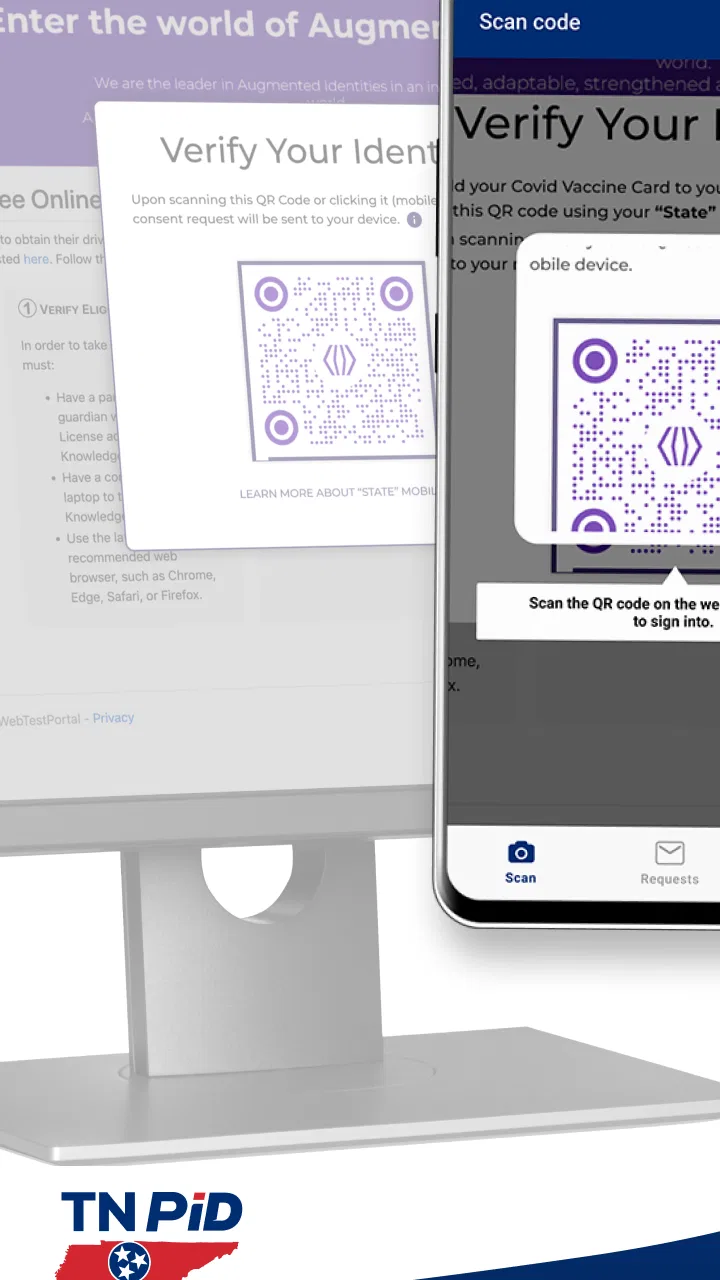
Tennessee Proctor ID
- 3.3
- Rating
- 100.00K
- Installs
- Free
- Price

 Analysis by App-foxy
Choosing an app for vehicle-related identification is usually less about entertainment and more about whether it solves one specific task without creating extra confusion. Tennessee Proctor ID sits in that narrow space. It is an Auto & Vehicles app built around the Tennessee Proctor service, and my impression is that it makes the most sense when you already need to use that particular process rather than when you are simply looking for a general driving, parking, maintenance, or document app.
I approached it as a decision rather than as a quick download recommendation. The important question is not whether it has a long list of features, because this is a focused tool. The better question is whether its purpose matches your situation, whether your phone can run it, and whether you are comfortable using a dedicated app instead of handling the same kind of task through a browser or a broader government-services platform.
What to consider before choosing Tennessee Proctor ID
The first thing I would check is relevance. The store summary is simply “TN Proctor ID,” with the short description “Tennessee Proctor.” That wording tells me this is not intended to be a universal identity wallet or a complete collection of Tennessee vehicle services. I would install it when I had been directed toward the Proctor ID process, not because I wanted a general-purpose motoring companion.
You May Also Like

 Google Keep - Notes and lists
Google Keep’s Quiet Growth Shows the Appeal of Simpler Notes
As mobile work gets busier, Google Keep keeps winning a simple contest: capture a thought quickly, find it later, and get on with the day.

 Blood Strike: 2.5 Anniversary
Blood Strike’s Loadouts Turn Every Drop Into a Tactical Gamble
A close look at Blood Strike’s custom loadouts: how fast access to signature weapons reshapes its battle royale rhythm, rewards preparation, and narrows the gap between fights.

 Pandora - Music & Podcasts
Pandora’s Music Is Easy to Start, but Harder to Recover
Pandora’s strength is its low-effort path from a seed to a station. Its weak spot is how much confidence it asks you to place in connection, setup, and quiet recovery.

 8 Ball Pool
 Is Built on Rivalries, Rematches, and Routine
A close look at the rivalries, rematches, shared routines, and unanswered safety questions that turn a quick pool match into a persistent mobile community.

 Samsung Music
’s Quiet Strength Is Playing What You Already Own
Its reach comes less from spectacle than from dependable access to a personal library. That simplicity is both the app’s strongest retention engine and its ceiling.

 AccuWeather: Weather Radar
AccuWeather Review: A Quick, Clear Forecast for Everyday Decisions
For everyday plans, the best forecast is the one you can understand quickly. AccuWeather makes rain timing, radar, and local conditions easy to act on, with a few trade-offs.
More From Our News Desk



That distinction matters for everyday users. Someone searching for fuel prices, route planning, repair reminders, insurance documents, or parking payments is looking in the wrong category. Those tasks usually call for specialized apps with broader consumer features. This one belongs to a more specific workflow, and its value depends heavily on whether that workflow applies to you.
Compatibility is another practical checkpoint. The app runs on Android devices using version 6.0 or later, so many older phones can potentially use it. Still, I would not treat the minimum operating-system requirement as a guarantee of a smooth experience on every older handset. Screen size, camera quality, storage, security settings, and the condition of the phone can all affect a process involving identification. Before starting anything important, I would update the phone if possible, charge it, and make sure the device is connected reliably.
The app is free, which removes the most obvious financial barrier. That does not mean switching is costless in a practical sense. You still spend time installing it, learning its flow, and preparing whatever information the process expects. If you are completing a time-sensitive task, that preparation matters more than the download price.
Privacy and trust should also be part of the decision. An identity-focused vehicle app is different from a casual map or fuel tracker because the user may feel more cautious about entering or presenting personal information. I would install it only from the official app marketplace, check that the developer shown there is IDEMIA Civil Identity NA LLC, and avoid using a borrowed or shared phone for a sensitive process. Those are simple habits, but they reduce avoidable risk.
How I would prepare before opening it
My practical advice is to avoid beginning at the exact moment you need the result. Install the app while you still have time, open it once, and see whether the first steps are understandable. Keep your phone’s camera lens clean, turn off anything that blocks the screen, and use a stable connection. If the process involves presenting an ID or taking a photo, good lighting and a steady hand are more useful than repeatedly tapping the same button.
I would also keep the phone’s date and time set automatically. That is an easy detail to overlook in any identity-related workflow, and incorrect device settings can make a digital process feel unreliable even when the app itself is working normally. I would not start while driving or parked somewhere unsafe; complete the setup before the vehicle is moving and preferably while stationary in a suitable place.
A less obvious tip is to plan for interruption. If a call arrives, the battery drops, or the connection changes, you may need to return to the process. I would close unnecessary apps, keep the charger nearby, and avoid switching networks halfway through. This is not a glamorous feature, but it is the kind of preparation that makes a focused utility feel much easier to use.
Where the dedicated app can be the better choice
The strongest case for Tennessee Proctor ID is focus. A dedicated application can feel clearer than a general website when the user has one named process to complete. Instead of searching through unrelated vehicle services, you begin with a tool that is specifically associated with Tennessee Proctor. For a person who received instructions to use it, that directness can be more valuable than a large feature set.
I also like the idea of separating a specialized identity task from everyday apps. A navigation app is designed to keep you moving, a maintenance app is designed to track vehicle care, and a document-storage app is designed to organize files. None of those categories necessarily gives you the right starting point for a Proctor ID workflow. Using the purpose-built option reduces the chance of assuming that a familiar alternative supports a process it was never designed to handle.
The app’s age rating is Everyone, which makes its intended audience broad rather than restricted to adults. I would still judge suitability by the situation and the information involved, not by the rating alone. A younger user may be able to install an app with that rating, but an identity process can still require careful supervision or guidance from the person responsible for the vehicle or documentation.
Its reach is also meaningful. Tennessee Proctor ID has passed the hundred-thousand-install mark and has an average rating of 3.3 from roughly 372 ratings, alongside 227 written reviews. I read that combination as a sign of a real but specialized user base, not as proof that every person will have the same experience. A middling average often means the app works well for some intended tasks while frustrating people who expected something broader or encountered a problem during a critical step.
In my view, the most useful strength is not speed or visual polish; it is alignment. If your instructions specifically point to this app, choosing the dedicated tool is usually more sensible than improvising with a generic identity, vehicle, or browser app. The closer the task matches the app’s purpose, the less important the limited scope becomes.
Small workflow choices that can prevent frustration
I would treat the first launch as a setup session, not as a race. Read each screen fully before moving on, especially if the app asks you to confirm information or use the phone’s camera. If a step does not work, repeating it immediately may not help. Instead, I would check lighting, camera access, connection stability, and whether another app is already using the camera.
Another useful habit is to keep the original instructions beside you, either on paper or on another trusted device. That prevents the common mistake of leaving the app repeatedly to search for what to do next. On a single phone, jumping between messages, browser pages, and the app can interrupt the flow and increase the chance of entering the wrong detail.
I would also avoid uninstalling the app immediately after one successful use if you expect to revisit the same process. Keeping it available may save time later, although I would still review updates and remove it when I no longer have a reason to keep an identity-related tool installed. The right balance is convenience without treating every installed app as permanent.
When a different category may fit better
There are several situations where I would choose something else. If your real need is ordinary vehicle management, a maintenance tracker or manufacturer app will probably be more useful. If you need directions, traffic information, or roadside discovery, a navigation app is the natural choice. If you mainly want to store insurance cards or registration documents, a secure document or wallet tool may provide a better overall home for those files.
A mobile browser may also be the better option when you only need occasional access to a broader state service and do not want another dedicated app on your phone. The trade-off is that a browser can make it harder to find the right page and may not provide the same focused entry point. I would choose the browser when the task is rare and the official web route is already familiar; I would choose Tennessee Proctor ID when the instructions specifically identify the app and I expect to use that workflow directly.
People who dislike installing apps for one-off tasks should think about the cost of switching. The free price helps, but you still have to download it, grant whatever access the process requires, learn the interface, and possibly troubleshoot the phone. A browser-based alternative may feel lighter for a single use. On the other hand, avoiding the dedicated app can create more searching and uncertainty if the service was designed around it.
I would also hesitate if the phone is old, unreliable, or shared with several people. The minimum Android requirement is 6.0, but an operating system that technically qualifies does not guarantee a comfortable experience. A weak camera, nearly full storage, unstable connection, or aggressive battery-saving mode can turn a simple identity step into repeated failure. In that situation, using a newer personal device is a better decision than blaming the app after a poor attempt.
The rating gives me another reason to keep expectations realistic. A 3.3 average is neither a strong endorsement nor a reason to dismiss the app automatically. For a narrow official workflow, usefulness can matter more than broad popularity. I would judge it by whether it helps complete the exact Tennessee Proctor task, not by comparing it with entertainment apps that are designed to delight users for long sessions.
What switching really involves
Moving from a browser or another tool to this app is not just a matter of pressing install. You may need to change where you keep the instructions, how you access the service, and which phone handles the process. If someone else normally manages vehicle paperwork for your household, agree in advance who will use the app and where the relevant information is kept. That avoids a last-minute handoff with a locked phone or missing details.
If you are replacing an older identity-related app, I would not delete the old one until the new workflow has been tested successfully. Keep the old route available as a fallback, but do not enter sensitive information into multiple unofficial-looking tools just to see which one works. Confirm the app name and developer before proceeding, particularly because short names can be easy to confuse in a crowded marketplace.
For families, the best arrangement may be a single designated device rather than installing the app everywhere. That makes updates and troubleshooting simpler, while reducing the number of phones that might contain traces of a sensitive process. The downside is dependence on that one device, so I would make sure it is charged and accessible before an appointment or required submission.
My recommendation for the right Tennessee user
I recommend Tennessee Proctor ID to people who have a clear Tennessee Proctor-related reason to use it and want a focused mobile entry point. Its free availability, broad age rating, and support for Android 6.0 or later make it easy to consider, while its dedicated purpose keeps the choice straightforward for the intended audience. I would install it ahead of time, test the basic flow while stationary, and prepare the phone rather than waiting until the task becomes urgent.
I do not recommend it as a general vehicle app. It will not replace navigation, maintenance planning, parking tools, insurance storage, or a complete collection of state services. If those are your goals, another category will serve you better and may save you from installing an app whose purpose is too narrow.
My final view is cautiously positive: this is a practical specialist rather than an all-purpose companion. The developer, IDEMIA Civil Identity NA LLC, has produced an app with a clearly defined role, but the moderate rating reminds me to approach it with realistic expectations. Choose it because the Tennessee Proctor workflow calls for it, not because the name sounds like a complete vehicle solution.
Before relying on it, I would confirm that the phone is compatible, the connection is dependable, the camera works, and the person completing the process has the necessary information ready. Those checks address the most likely sources of friction without adding unnecessary complexity. For the intended task, that preparation can make a narrow app genuinely useful; outside that task, a browser or a more specialized everyday vehicle app is likely the smarter choice.
FAQs for Tennessee Proctor ID
01What is Tennessee Proctor ID used for?
Tennessee Proctor ID is an app designed for secure identity verification during online examinations. It ensures that the person taking the test is indeed the registered candidate, using advanced biometric and identity verification technologies. This helps maintain academic integrity and prevents fraudulent activities in online testing environments.
02How does Tennessee Proctor ID ensure my privacy is protected?
Tennessee Proctor ID prioritizes user privacy by implementing stringent data protection measures. The app uses end-to-end encryption for all data transmissions and complies with global privacy standards. Biometric data is stored securely and is only accessible to authorized personnel, ensuring that your personal information remains confidential.
03Is Tennessee Proctor ID compatible with all devices?
Tennessee Proctor ID is available for both Android and iOS devices. It requires a device with a camera and microphone for identity verification processes. While it supports most modern smartphones and tablets, users should check the app store for specific device compatibility and system requirements before downloading.
04What should I do if Tennessee Proctor ID fails to verify my identity?
If you encounter identity verification issues with Tennessee Proctor ID, first ensure that your device’s camera and microphone are functioning properly. Ensure you are in a well-lit area and follow any on-screen instructions carefully. If problems persist, contact the app’s customer support for further assistance and troubleshooting steps.
05Does Tennessee Proctor ID require a constant internet connection?
Yes, Tennessee Proctor ID requires a stable internet connection to perform real-time identity verification and data synchronization. It is essential to have a reliable Wi-Fi or mobile data connection throughout the verification process to avoid any interruptions or errors. Consider testing your connection before starting the verification process.
Pros
- User-friendly interface for easy navigation.
- Fast and reliable identity verification.
- Secure data encryption for privacy protection.
- Supports multiple forms of identification.
- Quick setup and registration process.
Cons
- Limited customer support options available.
- In-app purchases may be required.
- Requires consistent internet connection.
- Not compatible with older devices.
- Occasional glitches in document scanning.

Tennessee Proctor ID
Gallery